

Organisations are spending more than ever on transformation, technology and AI. Many are not seeing the returns they expected. The gap is rarely in the strategy or the technology itself. It is in the human and organisational layer that sits between investment and outcome. And at the centre of that layer is the HR Business Partner.
The HRBP role was designed to be a bridge between people strategy and business performance. In practice it has become something else. Across most organisations, HRBPs are drowning in operational noise. They are the first call when a line manager cannot navigate shared services, when a centre of expertise produces a policy that nobody understands, or when an employee situation escalates because nobody else picked it up in time. They have become the shock absorbers of an HR model that is not working as intended.
This dynamic has a name: the Hero HRBP. HRBPs are usually the most visible face of HR in the business. When they fix a problem, people are grateful. Over time, this creates a powerful and perverse incentive. HRBPs are rewarded for responsiveness, not impact. The more operational they become, the more valued they feel, and the harder it is to change. Meanwhile, the strategic work that would genuinely move the business forward goes undone.
At the same time, HR leaders at every level are under pressure in a way that is genuinely without precedent. Our own research, conducted through in-depth interviews and roundtables with HR leaders across multiple sectors, found that 95% of HR leaders find their role overwhelming at times. The role carries unique pressures that other senior positions do not: the emotional intensity of being on the receiving end of everyone else’s difficulties, the isolation that comes from confidentiality, the breadth of a role that expands to fill whatever space is available, and the personal jeopardy of decisions that carry significant ethical and reputational weight.
The result is an HR function that is busy, stretched and broadly well-regarded, but not one that is shaping the business, anticipating what is coming or delivering the strategic impact that the organisation genuinely needs.
This is not a people problem. It is a structural one. And it is solvable.
We work with organisations to reposition their HR function for strategic impact, and with HR leaders, directors, chief people officers and HR business partners to build the capability to operate at that level.
Our approach is grounded in a clear-eyed understanding of why so many HRBP development initiatives fall short. Capability development in isolation does not work. HRBPs return to the same structural conditions that created the problem in the first place and the operational demand simply keeps coming. Lasting change requires addressing four enablers in parallel.
Line management capability. When managers are genuinely equipped to handle day-to-day people challenges, HRBPs are freed to focus on the work that actually requires their expertise. When they are not, no amount of HRBP development will shift the dynamic. Investing in line management capability is not a parallel workstream to repositioning the HRBP. It is essential to it.
Role clarity. The single biggest drag on HRBP effectiveness is not capability. It is confusion about who is responsible for what. When nobody has clearly defined where a line manager’s responsibility ends and the HRBP’s begins, work flows to whoever will pick it up. Real clarity means leaders, line managers and HRBPs having an honest conversation about accountabilities, agreeing them explicitly, and building the management capability to back them up.
HR operating model effectiveness. Most large organisations have adopted some version of the Ulrich model. In practice the execution frequently falls short. When shared services are not genuinely user-focused and reliable, when centres of expertise design solutions without staying close to the business, and when role boundaries are fuzzy, everything lands on the HRBP’s desk. We help organisations identify where the model is breaking down and how to fix it.
HRBP capability development. Once the other enablers are in place, targeted investment in HRBP capability is transformative. HRBPs who can challenge with data, lead change, diagnose complex problems and influence senior stakeholders become one of the highest-leverage assets in the organisation. This is where our development programme comes in.
We have developed a structured development programme specifically designed to shift HRBPs from operational firefighting to genuine strategic partnership. It is built around real organisational challenges, peer learning and individual coaching, and grounded in what it actually takes to make that shift in practice.
The programme is structured around ten strategic HRBP competencies, grouped into three clusters, which define what good looks like at a strategic level and form the basis of individual self-assessment and 360-degree feedback that participants complete before the programme begins. These competencies provide a shared language for development throughout and a clear benchmark against which progress can be measured.
The core of the programme is five face-to-face workshops, supported by action learning sets, peer coaching and individual coaching sessions. Each workshop addresses a critical dimension of strategic HRBP capability:
Workshop 1: Strategy and Transformation. Positioning HRBPs as strategic partners who align people priorities to organisational strategy and lead transformation effectively.
Workshop 2: Data, Insight and AI. Building the capability to influence through data and evidence, develop compelling narratives for senior stakeholders, and support organisations with the people implications of technology and AI.
Workshop 3: Workforce and Talent Strategy. Developing future-focused workforce plans, building talent pipelines and helping organisations transition to skills-based ways of working.
Workshop 4: Consulting and Influencing. Shifting HRBPs from order-takers to trusted advisors, with practical skills in problem diagnosis, solution design, stakeholder mapping and managing resistance.
Workshop 5: Culture, Experience and Ethics. Enabling HRBPs to drive sustainable performance through culture and employee experience, including navigating the ethical dimensions of AI in the workplace.
Throughout the programme, participants work on a real organisational challenge of their own choosing, applying the tools and frameworks from each workshop to a live business problem. This ensures that learning translates directly into measurable impact rather than remaining theoretical.
Beyond the HRBP programme, we work with HR functions at every level:
HR leader and director coaching. Individual and group coaching for HR directors and chief people officers, providing the confidential space to work through complex challenges, develop strategic thinking and build personal resilience. For many HR leaders this is also the sounding board they rarely have access to elsewhere.
Wellbeing and resilience for HR professionals. Drawing on our original research into HR leader burnout and overwhelm, we help HR functions develop the individual and structural strategies that protect their people from the particular pressures of the role.
HR team development. Helping HR functions work more effectively as a team, building stronger internal relationships, clarifying accountabilities and creating the psychological safety that allows honest conversations about what is and is not working.
Action learning for HR professionals. Small group sessions where HR professionals work on real challenges together, developing their thinking and learning from the experience of peers who understand the unique pressures of the HR role.
One of the things we are most proud of at Tap’d is our HR Leader Wellbeing Roundtable community. Started in response to growing evidence that HR leaders were experiencing levels of overwhelm and burnout that the profession was not openly acknowledging, these roundtables bring HR leaders together in a confidential, supportive environment to share experiences, develop strategies and support one another.
The roundtables are not a commercial product. They are our contribution to a profession we deeply respect and want to see thrive. If you are an HR leader and would like to join the community, we would be delighted to hear from you.
HR functions that work with Tap’d typically find that their business partners operate with greater confidence and credibility in senior stakeholder relationships. The function begins to be seen differently by the business, as a genuine strategic partner rather than an administrative resource.
HRBPs develop the commercial acumen, analytical confidence and influencing skills to contribute meaningfully to strategic conversations rather than simply being called in to resolve operational problems. And the organisation as a whole begins to realise the return on investment that its HR function was always capable of delivering, but was never quite in the right position to do.
We have worked with HR functions and HR leaders across a wide range of sectors and organisation sizes, from small people teams in scaling businesses to large, complex HR functions in global organisations. Our work in this space is also informed by our ongoing research into the HR profession, including our published white paper on “The Strategic Importance of the HR Leader’s Own Wellbeing”, which draws on interviews with 21 HR leaders and makes a compelling case for why supporting the HR function is not a nice-to-have but a strategic imperative.
Whether you want to explore the “New HRBP” programme, develop your HR leadership team or simply have a conversation about the challenges your function is facing, we would love to talk.
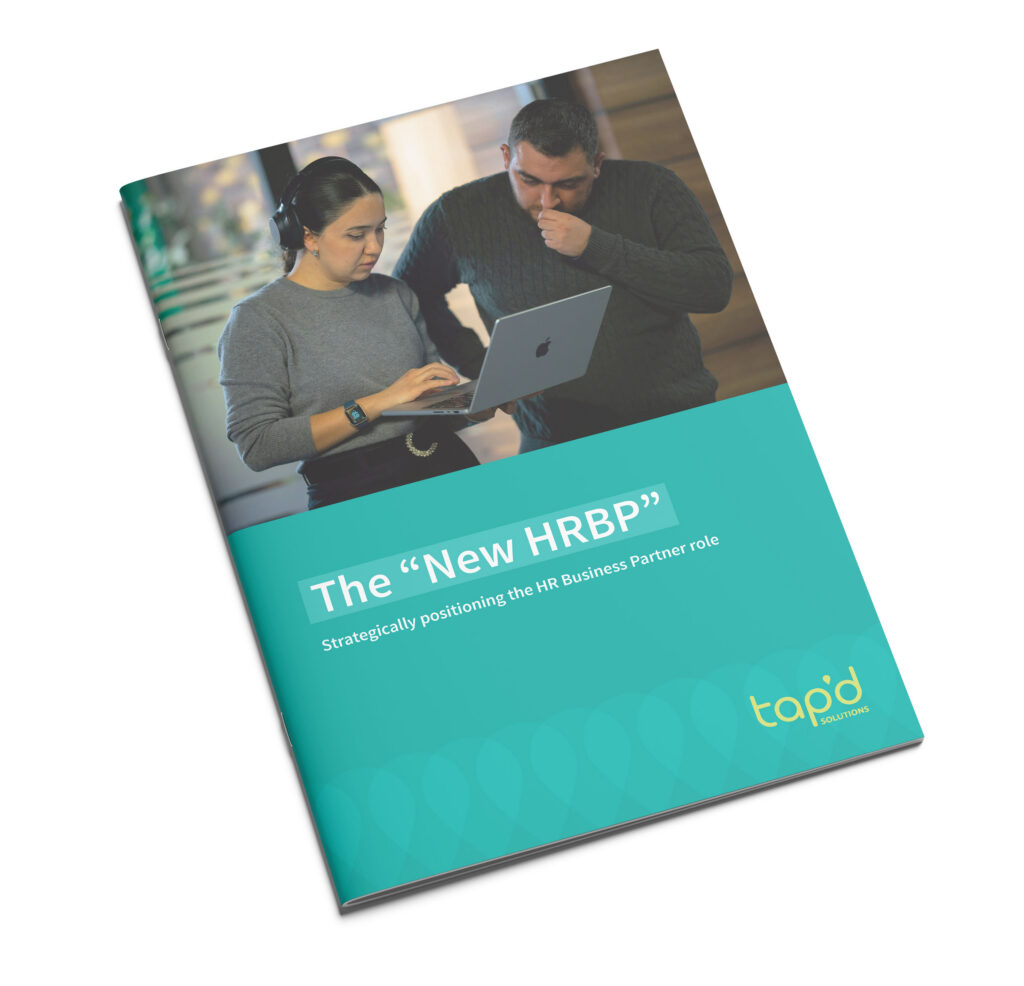
As organisations navigate transformation, AI and evolving workforce demands, HR Business Partners must move beyond operational support to become strategic drivers of business performance.
In this white paper, Fiona Ryland explores the barriers holding HRBPs back and outlines practical steps to build the commercial, analytical and influencing capabilities needed to create lasting organisational impact.

We help organisations get more from their most important asset. Their people.
Copyright © 2026 All Rights Reserved. | Privacy Policy